For catering, the tableware that actually works in volume is the boring-but-reliable kind: areca palm leaf plates that hold a plated meal without bending, sugarcane bagasse trays and clamshells for buffets and takeaway, and birchwood cutlery that does not snap. Order them as a coordinated set, size them to your menu, and lock in a supplier who can repeat the same quality on every reorder. Compostable does not have to mean flimsy or inconsistent, which are the two things that get a caterer complaints. Here is how to source a full compostable service that holds up across plated dinners, buffets, and off-site events.
I manufacture and export this tableware, so the guidance below is from the production and shipping side, not a generic listicle. We supply caterers, venues, and event companies in bulk across 34 countries, and repeat catering orders are one of the steadiest parts of what we ship.
What caterers actually need from tableware
A caterer is not buying a plate, they are buying a service that has to survive a real event. Five things matter more than anything else:
- Consistency across reorders. The plate you sampled has to be the plate that arrives six months later. Inconsistent thickness or color is what makes a table look cheap.
- Sturdiness for both plated and buffet service. It has to hold a hot, sauced main balanced on one hand, and survive a guest piling a buffet plate high.
- Stackability and storage. Catering runs on van space and prep tables. Tableware that nests and stores flat saves real money and time.
- Reliable bulk supply and lead time. Running short mid-season loses you a client. You need a supplier who can hold quality at volume and tell you the truth about lead times.
- A compostable claim they can market. Your clients increasingly ask for it, so the claim has to be real and backed by documentation, not a vague eco sticker.
The full compostable table, by service type
You rarely need one material. A working catering service usually mixes a few, matched to the course and the setting.
Areca palm leaf plates, for the plated meal
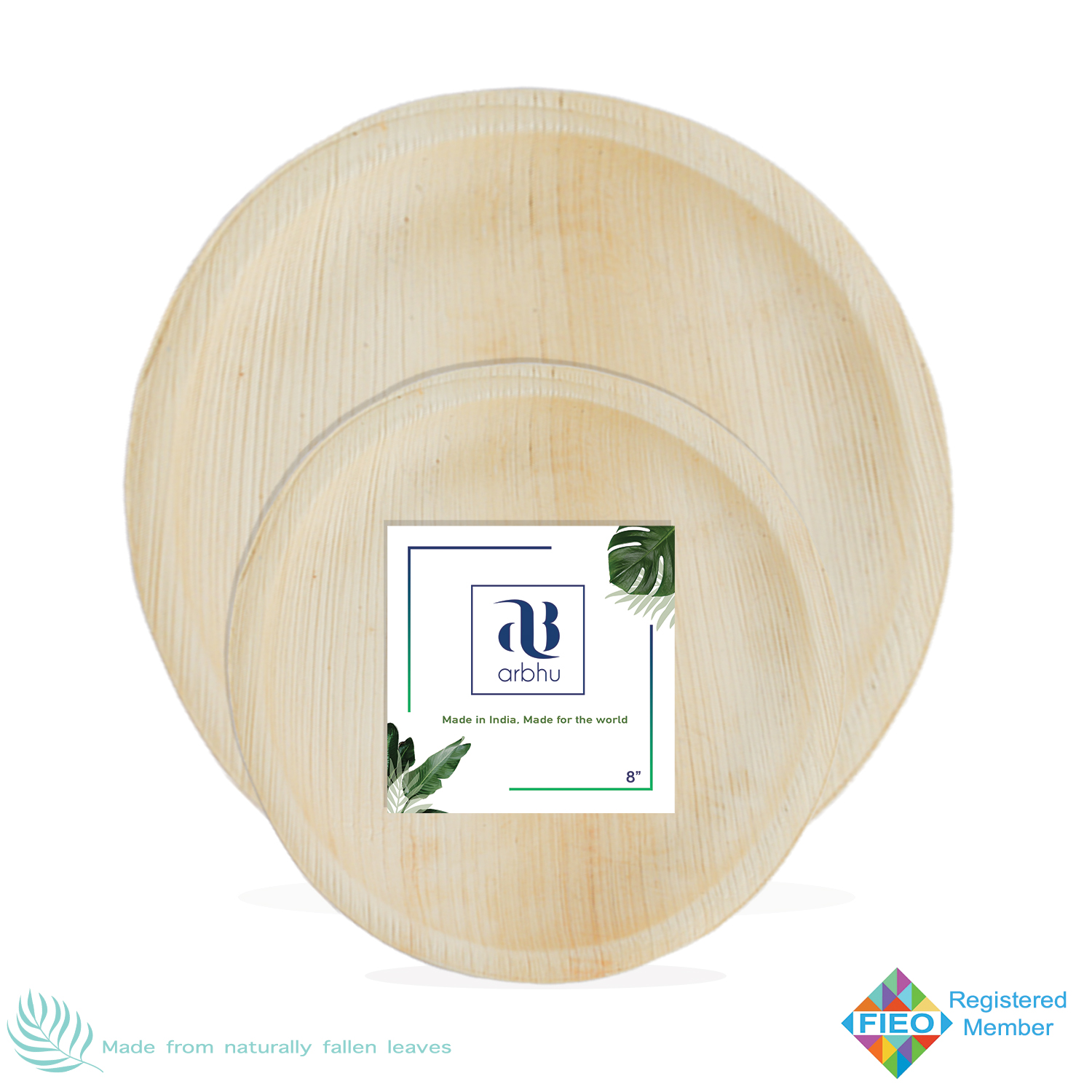
Areca plates are pressed from the naturally fallen leaf sheath of the areca palm, with nothing added but heat and pressure. No tree is cut and there is no coating. They read as rustic-premium rather than disposable, which is why they work for weddings and upscale catering, and they hold a full hot meal without going soft. They are grease and water resistant and microwave and freezer safe. Our range runs from about 6 inch dessert and side sizes up to 9 to 10 inch mains, in round, square, and compartment formats. For the exact sizes and how to pick them by course, see our palm leaf plate sizes and shapes guide.
Sugarcane bagasse, for buffets, sides, and takeaway
Bagasse is the fiber left after sugarcane is pressed for juice, molded into plates, bowls, meal trays, and clamshell containers. It is the workhorse of a catering kit: sturdy, grease and leak resistant, microwave and freezer safe, and it comes in the compartment trays and lidded boxes you need for buffet lines and for sending guests home with leftovers. If your service includes takeaway or drop-off catering, the clamshells and meal boxes in our compostable takeout containers range are built for exactly that. For background on the material, see what bagasse is.
Birchwood cutlery and bio cups, to complete the set
Birchwood forks, knives, and spoons finish the place setting without plastic, and compostable bio cups cover cold and hot drinks. Ordering cutlery, cups, and plates from one supplier is what keeps the look consistent and the reorder simple.
Matching tableware to menu and service style
- Plated dinners and weddings. Lead with areca plates for the look, sized by course. Our wedding tableware guide works through guest-count math you can reuse for any seated event.
- Buffets and grazing. Bagasse bowls and compartment trays hold up under self-service, and areca boards work for grazing displays.
- Drop-off and off-site catering. Bagasse clamshells and lidded meal boxes travel well and stack in a van. Order lids and bases as a set so nothing is mismatched on the day.
- Restaurants adding catering or delivery. Our compostable foodservice packaging guide covers the same formats from the venue side.
Ordering in volume: reorders, lead time, and landed cost
The two mistakes that cost caterers money are ordering on unit price alone and underestimating lead time. A few things to build into your sourcing:
- Work from landed cost, not the quoted unit price. Freight, duty, and last-mile can be half the real number. Our landed cost and fulfillment guide shows how to get one door-to-door number before you commit.
- Plan reorders around your season. Tell your supplier your peak months up front so stock and production are lined up. We would rather hold quality and give you an honest lead time than rush a batch.
- Sample from the actual production line. Specify the grade in writing and test the real product under service conditions before a big order.
- Order the set together. Plates, trays, cutlery, and cups bought in one order keep the table coherent and cut your admin.
On quality, our return rate runs under 3 percent, which for catering volumes is the number that matters. That comes from full drying and heat curing, inspection, and sealed packing with desiccant so nothing arrives damp or warped.
Compostability as a selling point for your clients
Sustainability is something you can put on your own proposal. Areca and bagasse tableware is designed to break down under composting conditions in about eight weeks in an industrial setting, and we provide the composting and food-contact documentation your market requires. Our products are made in ISO 9001:2015-certified facilities, and that certificate is held in the facility’s name. Arbhu holds its own export registrations, the Importer-Exporter Code and FIEO membership. The per-shipment documents, the phytosanitary certificate and the certificate of origin, are arranged for each order, and the compostability certificates are held by the manufacturing facility. We will supply what your market requires. That includes REX registration, which we put in place for confirmed orders that require it; until it is in place, proof of origin is a chamber of commerce certificate of origin, which is what our EU buyers use today. The full list, by market and by document, is in our certification matrix. For food contact we describe our products as FDA food-contact compliant. That is a claim your clients can trust, which is worth more than a vague label. See our certifications for the full list.
Frequently asked questions
What compostable tableware is best for catering?
A mix: areca palm leaf plates for plated and premium service, sugarcane bagasse bowls, trays, and clamshells for buffets and takeaway, and birchwood cutlery with bio cups to complete the set. Matching the material to the course gives you the best mix of appearance, sturdiness, and cost.
Can I order compostable catering supplies in bulk wholesale?
Yes. We manufacture areca palm leaf tableware, source our other lines from trusted suppliers in India, and export in bulk to caterers, venues, and event companies. Tell us your formats, volumes, and peak season and we will quote a coordinated order with an honest lead time. Prices are provided by quote, since they depend on formats and volume.
Is compostable tableware sturdy enough for a full plated meal?
Yes. Areca palm leaf plates hold a hot, sauced main without bending, and bagasse is grease and leak resistant and microwave and freezer safe. The complaints usually blamed on the material, such as warping or odor, come from plates shipped damp, which proper drying and sealed packing prevent.
How long do compostable plates take to break down?
Areca and bagasse tableware is designed to break down under composting conditions in about eight weeks in an industrial composting setting. We supply the relevant composting documentation for your market on request.
Sourcing a full compostable service for your catering business? Tell us your formats and volumes and we will put together a coordinated quote. Browse areca palm leaf tableware, bagasse tableware, and birchwood cutlery, or contact us or message us on WhatsApp at +91 63815 09553 to request samples.