Palm leaf plates sometimes arrive with mold spots, a musty smell, or a warped shape. It is almost always a moisture problem, caused by plates that were not dried, inspected, or packed properly before shipping, not by the leaf itself. A well-made areca plate that is heat-cured, quality-checked, and sealed with a desiccant does not do this. Here is exactly why it happens and how to buy plates that arrive clean.
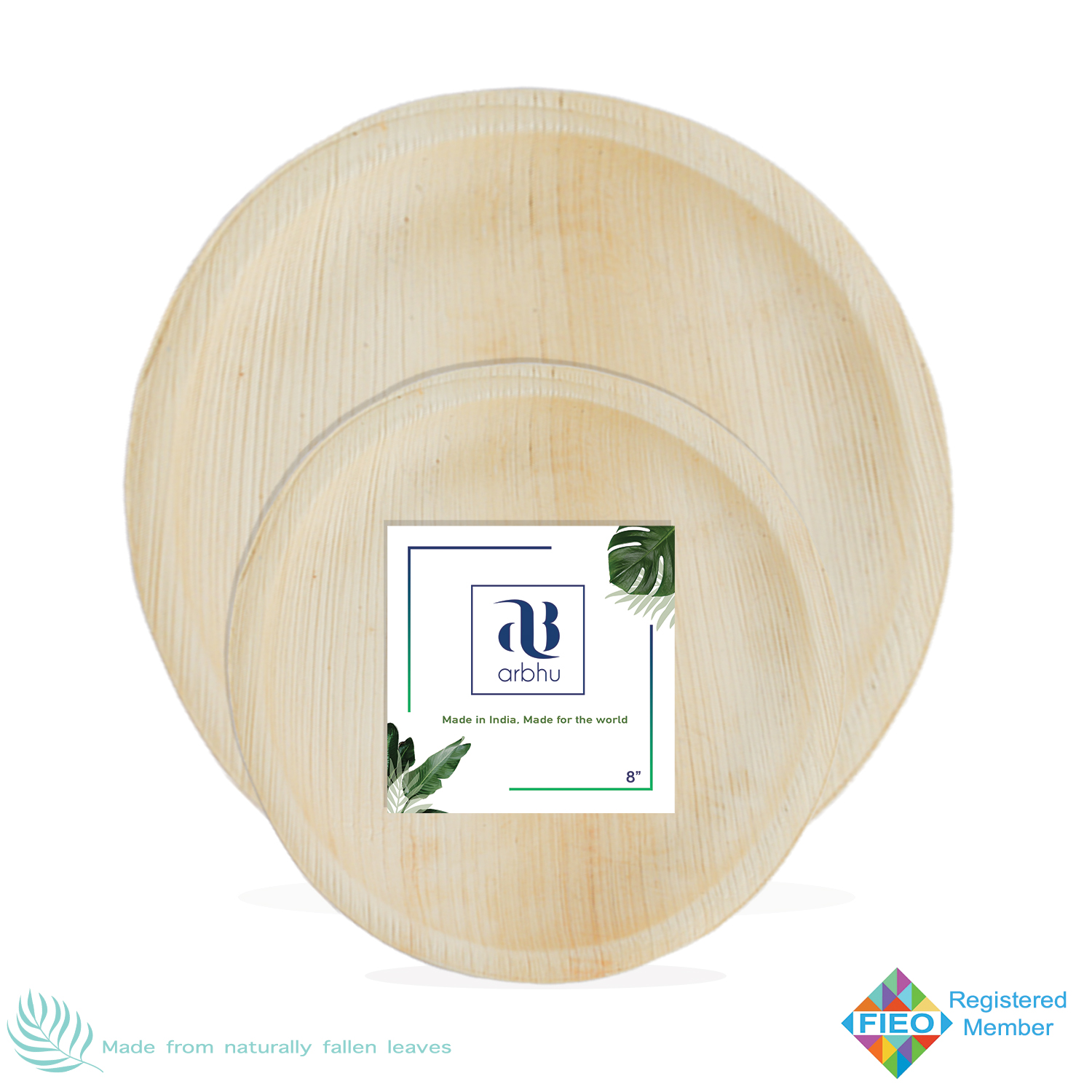
I manufacture these, and mold or odor is the single most common complaint buyers mention about low-grade stock. It is preventable, so it is worth understanding.
Why it happens
Palm leaf plates are a natural fibre, so like any natural material they will absorb moisture and grow mold if they are stored or shipped damp. The usual causes:
- Under-drying. If the leaf is not fully dried and heat-cured during pressing, residual moisture stays in the plate and turns to mold in a sealed carton, especially on a long ocean voyage through humid ports.
- No moisture barrier in the pack. Plates packed without a desiccant and airtight wrap keep absorbing humidity in transit and storage.
- Low-grade or reject stock. Cheap “export reject” plates with existing dark spots or thin drying are far more prone to mold and odor.
- Warping is the same story: a plate that reabsorbs moisture, or that was pressed unevenly, loses its flat shape and will not stack.
Note one thing buyers often misread: the natural brown grain and occasional darker streaks in an areca plate are the leaf’s own pattern, not mold. Mold is fuzzy and localized; the grain is smooth and part of the material. To understand the material, see how palm leaf plates are made.
How a quality supplier prevents it
Preventing mold and odor is entirely a process question. What a serious manufacturer does:
- Full drying and heat curing so no residual moisture is trapped in the plate.
- Inspection of pressed plates for cracks, dark spots, moisture, and finish, with under-grade pieces pulled out rather than shipped.
- A desiccant (silica gel) in each pack to absorb any humidity during transit.
- Airtight shrink-wrap or sealed packing so the plates cannot draw moisture in the container or warehouse.
- Export-grade selection, not export-reject or local-grade stock, for shipments that cross the ocean.
Arbhu dries and heat-cures, inspects, and packs with a desiccant and sealed wrap for exactly this reason, which is why our return rate runs under three percent. We can share our quality and food-safety documentation on request; see our certifications.
What to check before you buy
Whether you buy from us or anyone else, ask the supplier these before a bulk order:
- How are the plates dried and heat-cured, and is moisture checked before packing?
- Is a desiccant included and are packs sealed or shrink-wrapped?
- Are you shipping export grade, and how do you handle under-grade pieces?
- What is your return rate, and will you send samples so I can test arrival condition?
A supplier who answers these clearly is one who has solved the mold problem. A supplier who cannot is where the bad batches come from. For more on grading and vetting, see our guide on how to vet a supplier in India.
If plates do arrive damp
If a pack ever arrives with a musty smell but no visible mold, airing the plates out in a dry room usually clears it, as several buyers note. Visible mold, however, means the batch was shipped damp and should be raised with the supplier. The real fix is sourcing correctly in the first place.
Buying palm leaf plates that arrive clean
The making and packing process is your quality checklist: fully dried and heat-cured, inspected, export grade, desiccant, sealed pack. Browse our range of areca palm leaf plates, read the full areca palm leaf plates guide, or get in touch for samples and a wholesale quote. There is no online payment; it is a quote request.
Frequently asked questions
Why do my palm leaf plates smell?
Usually because they were packed with residual moisture. A musty smell with no visible mold often airs out in a dry room overnight. It is prevented by full drying, a desiccant in the pack, and sealed wrapping.
Are the dark spots on palm leaf plates mold?
Usually not. The natural brown grain and darker streaks are the areca leaf’s own pattern and are smooth. Mold is fuzzy and localized. If you see fuzzy growth, the batch was shipped damp.
How do I stop palm leaf plates from going moldy?
Buy export-grade plates that are fully dried and heat-cured, packed with a silica-gel desiccant and sealed wrap, and store them somewhere dry. The mold problem is caused by moisture in the pack, not by the leaf.
Why did my palm leaf plates warp?
Warping comes from plates reabsorbing moisture or being pressed unevenly. Properly dried, cured, and sealed plates stay flat and stack cleanly.
Written by Gulshan Iyer, Arbhu Enterprises, a manufacturer and exporter of compostable tableware in India. See our guides to how palm leaf plates are made and all our guides.