Coconut shell bowls are reusable serving bowls made from real, upcycled coconut shells that would otherwise be discarded. Each shell is cut, cleaned, sanded, and polished into a durable, natural bowl, so no two are exactly alike. They are light, warm-looking, and reusable for years with simple care, which is why cafes, eco retailers, and gifting brands use them as a natural alternative to plastic and ceramic serveware.
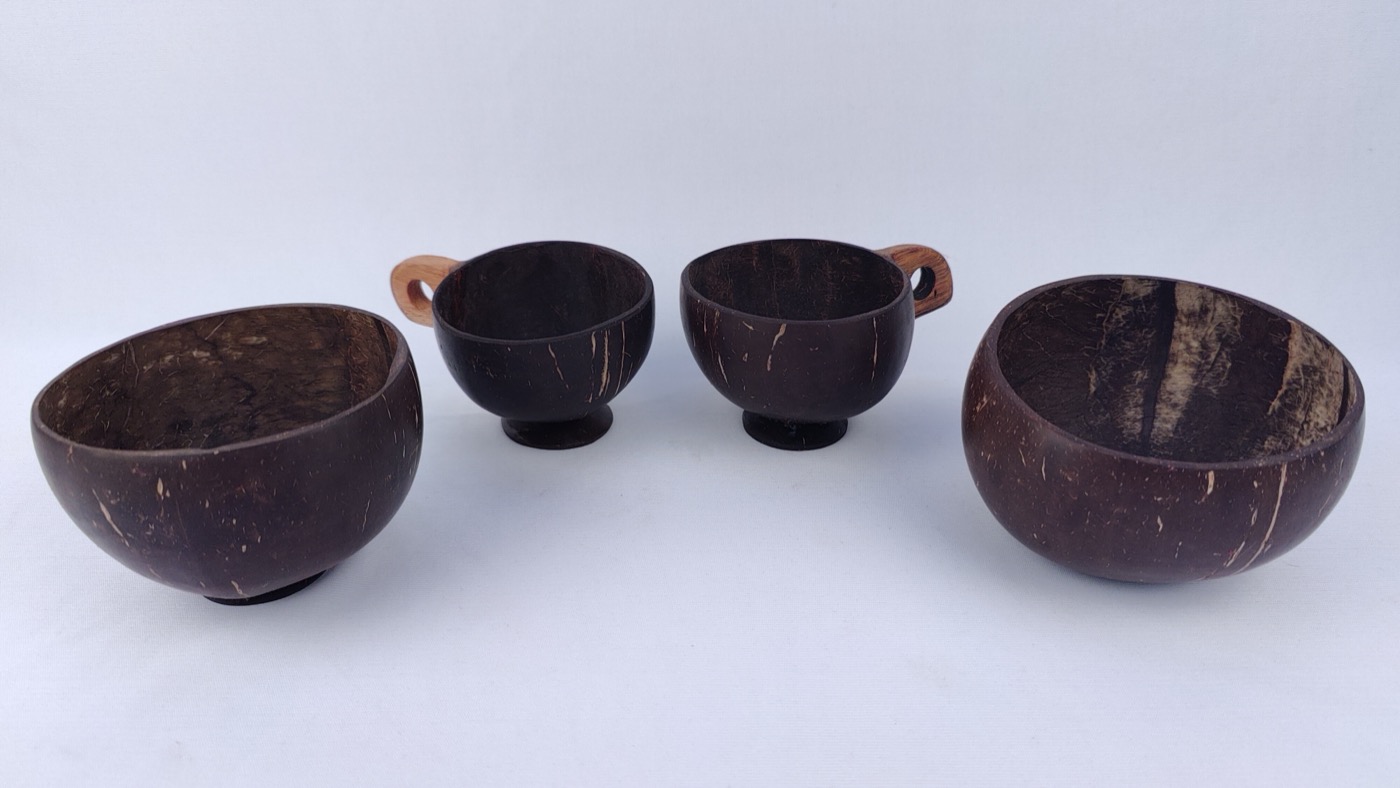
We source and export coconut serveware, working directly with the makers, so this guide is written from close to the making side: what these bowls are, how they are produced, whether they are food-safe, how to care for them, and what they are best used for. No hype, just what you need to know before you buy or sell them.
What are coconut shell bowls?
A coconut shell bowl is exactly what it sounds like: the hard outer shell of a coconut, cleaned and finished into a bowl. The shells are a byproduct of the coconut food industry, so turning them into serveware upcycles a material that would otherwise be waste. Because every coconut is a different size and grain, each bowl is genuinely unique, which is part of their appeal for natural, handcrafted table settings. They are reusable, not single-use, and sit closer to homeware than to disposable tableware.
How are coconut bowls made?
The process is largely handwork. In short:
- Selection and cutting. Whole shells left over from coconut processing are sorted, and the top is cut to open the bowl shape.
- Cleaning and sanding. The husk and fibre are removed, and the inside and outside are sanded smooth by hand.
- Finishing. The bowl is polished. A matt polish keeps a softer, natural look, while a full polish gives a smoother, glossier surface. Some makers apply a food-safe natural finish such as coconut oil.
- Quality check and sizing. Bowls are checked and grouped by capacity, commonly from about 150 ml up to 500 ml, including soup and serving sizes.
Because it is handwork on a natural material, small variations in shape, colour, and grain are normal and expected. That is a feature of a real coconut bowl, not a defect.
Are coconut bowls food-safe and eco-friendly?
Coconut bowls are a natural product made from an upcycled agricultural byproduct, which is what makes them an eco-friendly choice compared with new plastic. They are finished for serving food and drink. As with any natural serveware, ask your supplier what finish is used and request product documentation for your market, rather than assuming. On our side, you can see what documentation we provide on our certifications page. Being a natural material, they are best treated as reusable homeware, which brings us to care.
How to care for coconut bowls
Coconut bowls last for years if you treat them like fine wooden serveware rather than everyday crockery:
- Hand wash with mild soap and warm water, and dry them soon after.
- Do not put them in the dishwasher or microwave, and avoid long soaking, which can dull or crack a natural finish over time.
- Re-oil occasionally. A light rub of food-safe coconut or mineral oil now and then keeps the finish rich and the bowl looking its best.
Follow that and a coconut bowl stays beautiful for a long time. Treat it like a mug in a dishwasher and it will not.
What are coconut bowls used for?
Their natural look makes them a favourite for photogenic, plant-forward food and for gifting:
- Smoothie, acai, buddha, and poke bowls, where the bowl is part of the presentation.
- Ice cream and dessert service, often with a matching coconut spoon.
- Cafe and restaurant plating for a warm, natural table.
- Eco retail and corporate gifting, alongside coconut cutlery, tea cups, candles, and soap dishes made from the same material.
Coconut bowls vs ceramic and plastic
Ceramic is durable and dishwasher-safe but heavy, breakable, and uniform. Plastic is cheap but not eco-friendly and looks it. Coconut bowls sit in between: light, unbreakable in normal use, genuinely natural, and unique piece to piece. The trade-off is care; they are hand-wash only. For brands whose story is natural and sustainable, that trade-off is usually worth it.
Are there coconut shell plates, or only bowls?
This is the question we get most often, and the honest answer is that a coconut shell is curved, so the natural range is bowls, cups and shaped pieces rather than flat plates. A half shell keeps its depth; flattening it would mean cutting away most of the usable surface. So buyers searching for coconut shell plates or coconut shell crockery are almost always after the same thing, which is reusable serveware made from real shells, and in practice that means bowls in several depths, ice cream cups, bowls with matching spoons, and special shapes. If what you actually need is a flat serving surface in a natural material, that is a different product: areca palm leaf plates are pressed flat from fallen leaves and are compostable single-use rather than reusable.
Buying coconut bowls in bulk
If you run a cafe, an eco store, or a gifting brand, coconut bowls are usually bought wholesale and often private-labelled. We supply full-polish and matt-polish bowls from about 150 ml to 500 ml, bowls with matching spoons, ice cream cups, coconut wood cutlery, and gift pieces, and we let buyers order samples first and mix items to a workable order. See the wholesale coconut serveware page and the coconut collection, or request a quote. You can also reach us on WhatsApp or call at 916381509553.
Frequently asked questions
What are coconut bowls made of?
Real coconut shells, an upcycled byproduct of the coconut food industry. Each shell is cut, cleaned, sanded, and polished into a bowl, so every piece has a unique grain and shape.
Are coconut bowls dishwasher and microwave safe?
No. Coconut bowls are a natural product and should be hand washed only, and kept out of the dishwasher and microwave. Avoid long soaking, and re-oil occasionally to protect the finish.
How long do coconut bowls last?
With hand washing and the occasional oiling, coconut bowls last for years. They are reusable homeware, not single-use tableware.
What sizes do coconut bowls come in?
Commonly from about 150 ml up to 500 ml, including soup and serving sizes, in matt or full polish, with matching spoons and ice cream cups available.
Written by Gulshan Iyer, Arbhu Enterprises, a manufacturer and exporter of natural and compostable tableware in India. See our wholesale coconut serveware or all our guides.