Palm leaf plates are sold in three broad quality grades: premium export grade, export reject, and local grade. They look similar in a photo but behave very differently in a real order. The single most common reason a buyer receives stained, thin, or mold-prone plates is that they were quoted premium grade and shipped a lower one. Here is how the grades differ and how to make sure you get the one you are paying for.
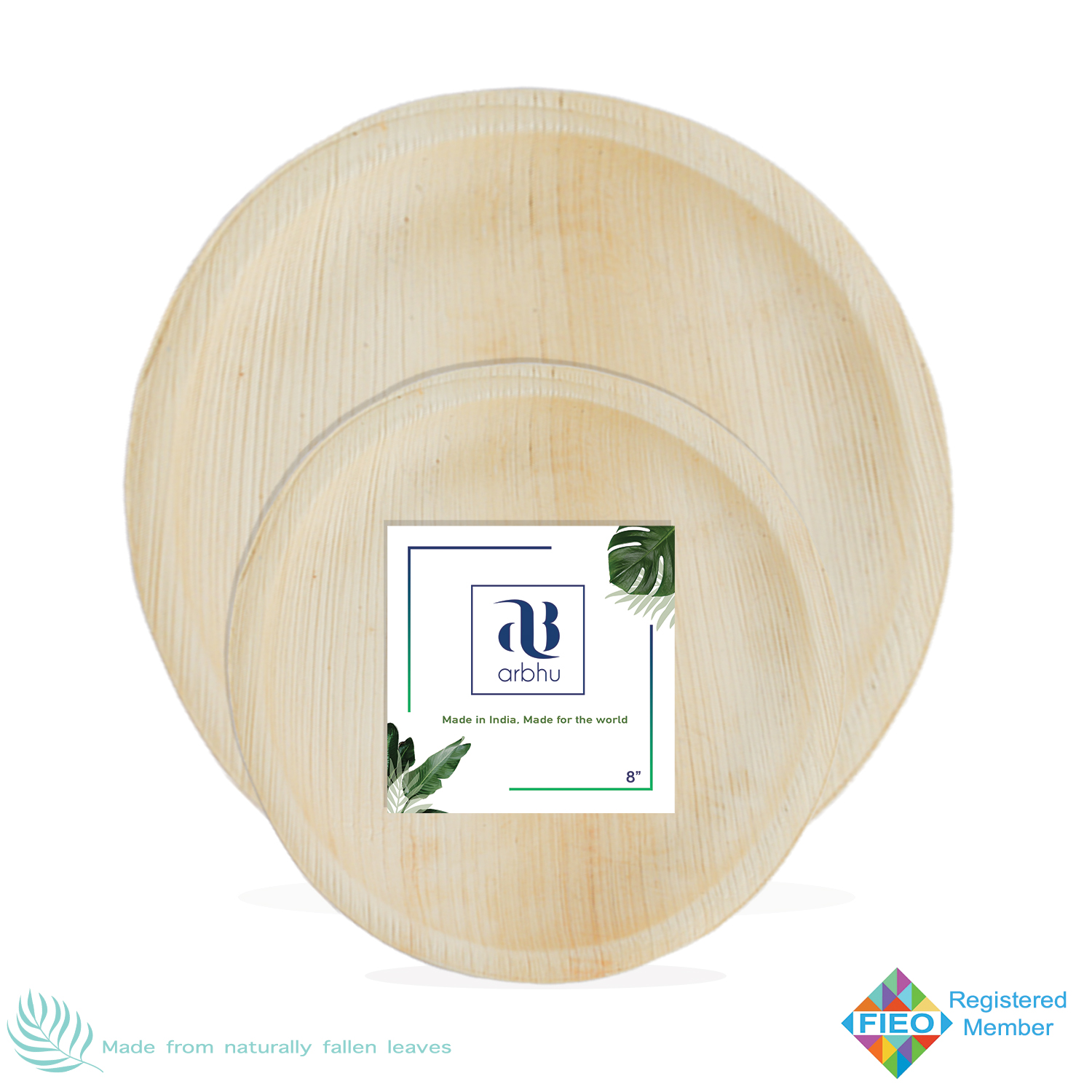
I manufacture and export these, so this is the grading buyers most often get wrong, and it is the difference between a clean shipment and a bad review.
The three grades, plainly
| Grade | What it is | Best for |
|---|---|---|
| Premium export | Uniform colour, no dark stains, fully dried and heat-cured, consistent thickness, no cracks, inspected and lab-tested, sealed with a desiccant | International retail, Amazon, events, anything that crosses the ocean |
| Export reject | Structurally usable but with cosmetic defects: dark spots, stains, uneven colour, occasional cracks, sometimes thinner; more prone to mold if not stored dry | Budget buyers who can accept irregulars; risky for retail |
| Local grade | Made for the domestic Indian market; may not be fully dried, tested, or export-documented; lowest cost, most variable | Local use, not international shipping |
Premium export grade
This is what a serious export order should be. The plates are a consistent natural colour with no dark blotches, fully dried and heat-cured so they hold shape and resist mold, even in thickness, free of cracks and splinters, inspected piece by piece, and packed with a desiccant in sealed wrap. Reputable producers can also show lab test results (for example an SGS arsenic and microbiological test) for the material. This grade is what survives a five-week ocean voyage through humid ports and still arrives clean.
Export reject
Export reject plates are the pieces pulled out of a premium run for cosmetic reasons: a dark stain, a patch of uneven colour, a small crack, or slightly thin drying. They are not dangerous and can be perfectly usable for a casual or budget setting, but they are a real risk for retail and marketplaces, because your customers will notice the marks and, if the drying was thin, the plates are more likely to develop odor or mold in transit. The danger is buying these unknowingly: a quote that is far below the market is often reject grade sold as premium.
Local grade
Local grade is made for the price-driven domestic market. It may not be fully dried or cured, is usually not lab-tested, and often lacks the export documentation international buyers need. It is the cheapest, but it is the wrong grade for anything shipped abroad or sold to end customers who expect consistency.
How to make sure you get the grade you pay for
- Specify the grade in writing. State “premium export grade” on your enquiry and purchase order. A supplier who is vague about grade is a warning sign.
- Ask what happens to reject pieces. A good producer pulls them out; ask how they are handled and what the accepted-irregulars percentage is.
- Request samples from the actual production line and check colour consistency, thickness, dryness, and finish before you commit to a bulk order.
- Ask for the drying, inspection, and packing process, and for any lab or quality documentation. This is also how you avoid the mold problem; see our guide on why palm leaf plates arrive moldy and how to avoid it.
- Be suspicious of a price that is much lower than everyone else. In palm leaf plates, an unusually cheap quote almost always means reject or local grade.
For the full supplier checklist, see how to vet a supplier in India.
What grade we ship
We supply premium export grade for international orders: fully dried and heat-cured, inspected, sealed with a desiccant, and backed by product and test documentation on request. Browse our areca palm leaf plates, read the full areca palm leaf plates guide, or get in touch for samples and a quote. There is no online payment; it is a quote request.
Frequently asked questions
What is the difference between export grade and export reject palm leaf plates?
Export grade plates are uniform, fully dried, inspected, and defect-free, made to survive international shipping. Export reject plates are pulled from the same run for cosmetic defects like stains, uneven colour, or small cracks, and are more prone to mold if the drying was thin. Reject grade sold as premium is the most common sourcing problem.
How do I know which grade a supplier is quoting?
Specify “premium export grade” in writing and ask the supplier to confirm it, request samples from the actual line, and ask for the drying, inspection, and packing process plus any lab documentation. A vague answer, or a price far below the market, usually means a lower grade.
Why are some palm leaf plates so much cheaper?
Because they are usually export reject or local grade: plates with cosmetic defects, thinner drying, or no testing and export documentation. They cost less but carry a higher risk of stains, odor, and mold, which is expensive if you are selling to end customers.
Is export reject grade safe to use?
It is generally safe to eat off, but it is cosmetically inconsistent and, if under-dried, more prone to mold and odor. It is a poor fit for retail or marketplaces where appearance and consistency drive reviews.
Written by Gulshan Iyer, Arbhu Enterprises, a manufacturer and exporter of compostable tableware in India. See our guides to avoiding moldy plates and how palm leaf plates are made, or all our guides.