Palm leaf plates are made from the leaf sheaths that the areca palm sheds naturally. No tree is cut. The fallen sheaths are collected, cleaned, and heat-pressed in a mould into plates, bowls, and trays, with no chemicals, dyes, or coatings added. The result is a sturdy, natural, compostable plate. Here is the full process, from a maker who presses them.
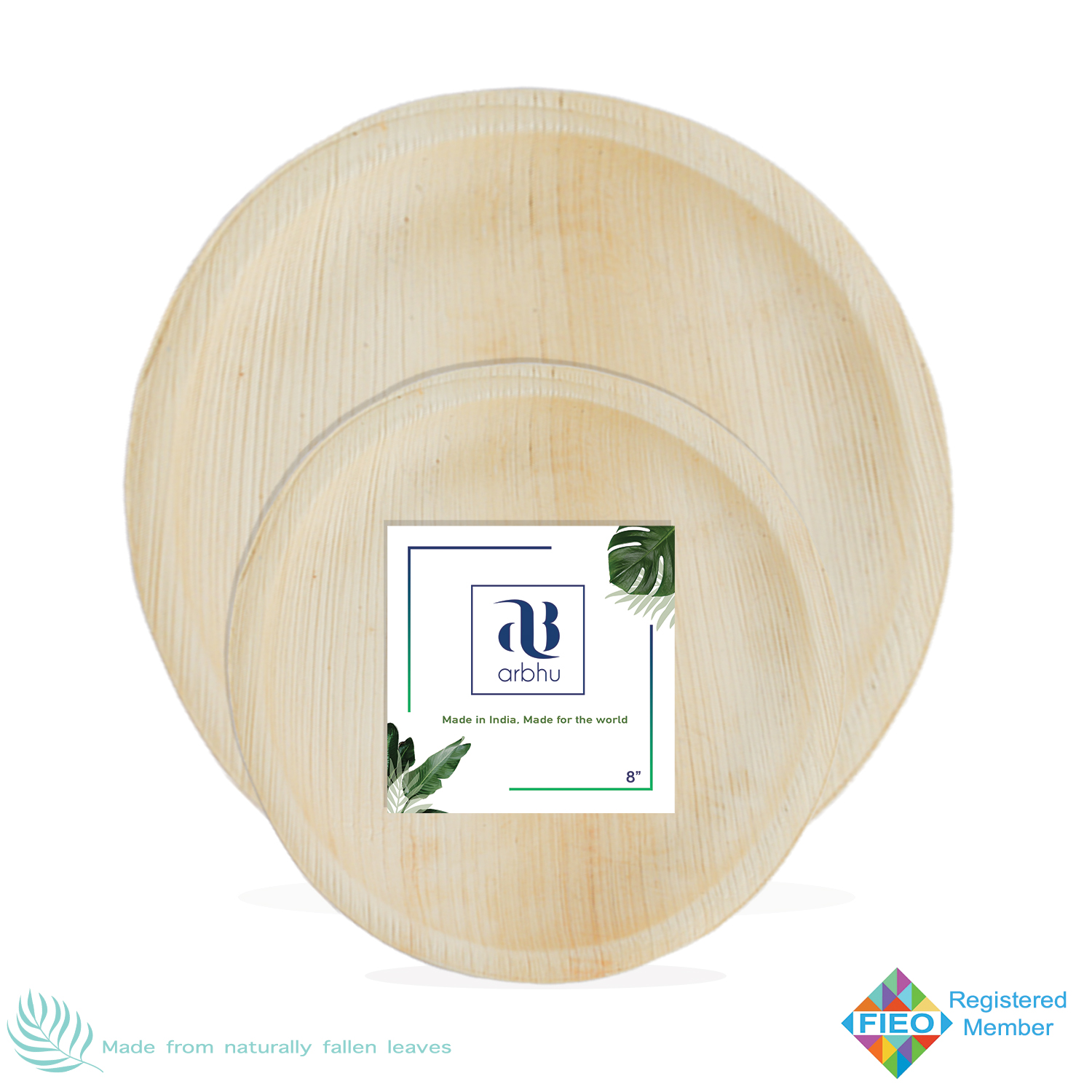
I manufacture these, so this is the honest, step-by-step account buyers ask me for when they want to know exactly what they are selling and where it comes from.
What palm leaf plates are made of
Palm leaf plates, often called areca plates, are made from a single natural material: the leaf sheath of the areca palm (Areca catechu). The areca palm grows across southern India and sheds these broad, tough leaf sheaths on its own as it matures. Because the sheath falls naturally, the plate is made from what is essentially an agricultural byproduct, and no tree is felled to produce it. There is only one ingredient, the leaf, with nothing added.
Step by step: from fallen leaf to finished plate
The process is simple and largely mechanical, which is part of why the plates stay chemical-free:
- Collection. Fallen areca leaf sheaths are gathered from palm plantations, usually by rural collectors. This is upcycling a material that would otherwise be burned or left to rot.
- Cleaning. The sheaths are washed to remove dust and grit. Only water is used.
- Softening. The cleaned sheaths are soaked or sun-dried so the leaf is pliable enough to take a shape without cracking.
- Heat pressing. Each sheath is placed in a metal die and pressed under heat and pressure. The heat drives off moisture and sets the leaf into the plate, bowl, or tray shape. Because the leaf is molded rather than cut, makers can produce many shapes, sizes, and compartment layouts.
- Trimming. The pressed piece is trimmed to a clean edge.
- Inspection and finishing. Plates are checked for cracks, moisture, and finish. Quality producers heat-treat and inspect to prevent mould and odour, the most common complaint with poorly made stock.
- Packing. Finished plates are counted, stacked, and packed for shipping.
No wax, plastic film, dye, glue, or chemical coating is used at any stage. The finish and the natural grain you see are the leaf itself.
Why the process makes a better plate
The way palm leaf plates are made explains what they are good at:
- Sturdy and rigid. Heat-pressing compacts the natural fibre, so the plates hold heavy, saucy food without flexing or leaking.
- Heat and cold tolerant. They handle the microwave, oven (within limits), and freezer, because there is no plastic layer to melt.
- Chemical-free and food-safe. With nothing added, there are no coatings to leach. Producers can provide food-safety and quality documentation on request.
- Naturally distinctive. Each plate carries a unique grain and colour from its leaf, which is why they suit weddings, events, and premium tableware.
Are palm leaf plates safe and hygienic?
Yes. Because they are made only from heat-pressed leaf with no chemical treatment, palm leaf plates are safe for hot and cold food. The heat-pressing step also sterilises the leaf. The one thing to check when buying is that the producer controls moisture and inspects for mould, since a poorly dried plate can develop odour. Ask your supplier how they dry, inspect, and pack. We provide product and test documentation on request.
How compostable are they?
Very. Because a palm leaf plate is nothing but leaf, it breaks down cleanly under composting conditions and returns to soil, unlike coated paper or plastic plates. If the precise difference between compostable and biodegradable matters for your market, see our guide to compostable vs biodegradable.
Buying palm leaf plates
If you sell or serve on them, the making process is also your quality checklist: single-material leaf, chemical-free, well dried and inspected, sturdy enough for your dishes. Browse our range of areca palm leaf plates, our compartment plates and grazing boards, or get in touch for a wholesale quote. There is no online payment; it is a quote request.
Frequently asked questions
What are palm leaf plates made of?
They are made from a single material: the naturally fallen leaf sheath of the areca palm. Nothing is added, no dyes, wax, plastic, or chemical coatings.
Is any tree cut down to make palm leaf plates?
No. The areca palm sheds its leaf sheaths naturally, and those fallen sheaths are collected to make the plates. It uses an agricultural byproduct, so no tree is felled.
How are palm leaf plates made?
Fallen areca leaf sheaths are collected, washed with water, softened, then heat-pressed in a mould into plates, bowls, or trays. They are trimmed, inspected, and packed. No chemicals are used at any step.
Are palm leaf plates food-safe and microwave-safe?
Yes. With no coatings to leach and no plastic to melt, they are safe for hot and cold food and handle the microwave and freezer. The heat-pressing also sterilises the leaf.
Are palm leaf plates compostable?
Yes. Being pure leaf, they break down cleanly under composting conditions and return to soil, with no plastic or coating left behind.
Written by Gulshan Iyer, Arbhu Enterprises, a manufacturer and exporter of compostable tableware in India. See our guide to compostable vs biodegradable or all our guides.